Thursday, October 4, 2012

Wii Fit Improves Balance in Children with CP (Study)

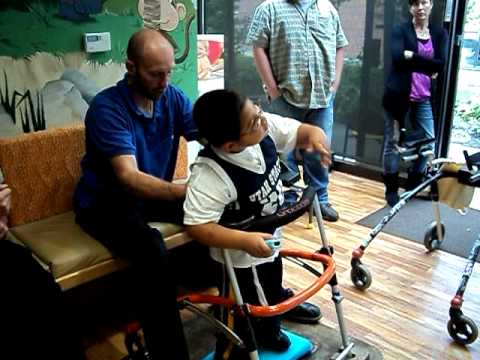
Can a 3 week physio regiment improve balance, running speed and agility in children with Cerebral Palsy (CP)? The first question before the investigators should have asked is if 3 weeks is a typical regiment length that sees improvement in those areas? If so, then ask the question if Wii Fit can be used in place of the traditional modalities. According to their findings, these children did not see a significant improvement in RSA scales, but balance scores did improve significantly. (Photo credit via wn.com)
Jelsma J, Pronk M, Ferguson G, & Jelsma-Smit D (2012). The effect of the Nintendo Wii Fit on balance control and gross motor function of children with spastic hemiplegic cerebral palsy. Developmental neurorehabilitation PMID: 23030836

Exergaming Points to Ponder (P2P)
  • Which games did they play in Wii Fit?
  • Were there 2 separate groups or was it a multiple baseline-design?
  • Although the changes may not have been statistically significant, were they clinical significant?
  • Were the changes over time compared to a traditional treatment group?
  • What assurances were there to mimic traditional tasks with the Wii Fit activities?
  • Was the total amount of time in therapy exactly the same as a traditional 3-week regiment? During a typical treatment period of 3 weeks, what would typically be the level of improvment occurring in patients.
  • Its interesting that they tested the children on running when for the most part there is no running feature in Wii Fit except for Free Run.
Objective: To study the impact of training using the Nintendo Wii Fit in 14 children with spastic hemiplegic cerebral palsy. Methods: A single-subject single blinded design with multiple subjects and baselines was utilised. Interactive video gaming (IVG) in lieu of regular physiotherapy was given for 3 weeks. Outcome measures included modified balance and running speed and agility (RSA) scales of the Bruininks-Oserestky test of Motor Performance 2 and the timed up and down stairs (TUDS). Results: Balances score improved significantly (F(2, 26) = 9.8286, p = 0.001). Changes over time in the RSA (F(2, 26) = 0.86198, p = 0.434) and the TUDS (F(2, 26) = 1.3862, p = 0.268) were not significant. Ten children preferred the intervention to conventional physiotherapy. Conclusion: Most children preferred the IVG but as the effect did not carry over into function, IVG should not be used in place of conventional therapy and further research is needed into its use as an adjunct to therapy.

Click here to explore more of ExerGame Lab's archived posts involving research studies. 
Enhanced by Zemanta

Wednesday, October 3, 2012

NFL & Xbox 60 Million Minutes to Better Health

 
Kinect for Xbox 360 and NFL PLAY 60 have teamed up to combat childhood obesity and inspire a healthier generation of kids. We're challenging kids of all ages across the nation to get their whole body in the game for 60 minutes every day.
You and your friends can help us reach our goal of inspiring 60 Million Minutes of active play this season. Pass the word along about the 60 Million Minutes Challenge today!
Exergaming Points to Ponder (P2P)
  • I wonder if they'll take in points and minutes from PlayFit on Xbox Live?
  • I think its great the NFL and Xbox are sponsoring this drive, but why aren't schools, states, provinces, and parents demanding more physical activity and PE in schools?
  • How will this data be tracked? Via Facebook, self-report, activity monitors?
Check back on October 9th for exciting updates and to pledge your support.
 

Here is Dr.Bill Crouse's message from his blog:

Sometimes my work at Microsoft takes an interesting turn. The other day my colleagues in our Interactive Entertainment Business asked if I would help them promote a campaign to fight childhood obesity. The physician in me jumped at the opportunity. After all, according to the Centers for Disease Control, about one third of all children and teens in the United States now fall into the category of being overweight or obese. That is triple the number since I first started practicing medicine in the early 1980’s.  And the consequences of so many young people being fat at an early age cannot be ignored. Overweight children are very likely to be overweight adults. With that comes a range of chronic illnesses and disabilities like high blood pressure, type 2 diabetes, joint problems, increased risk of stroke and heart disease, and even increased risk for some kinds of cancer.

Today we are kicking off a campaign called the Xbox 360 “60 Million Minutes Challenge”.  The objective is to get 1 million kids to pledge that they will play at least 60 minutes each day between now and Super Bowl Sunday on February 3rd.  The campaign joins a wider effort initiated by the National Football League called NFL Play 60.Of course the idea is to get kids more active no matter how they play, but getting in the game with Xbox 360 and Kinect is one such way.  If you’ve ever watched kids (and adults) playing with Xbox 360 using Kinect you know what I mean.  Kinect for Xbox 360 features controller-free gaming where you use your whole body to play and offers a natural and interactive way for kids to get off the couch - kicking, jumping, and running in place.The official spokesperson for the NFL Play 60 campaign and our 60 Million Minutes Challenge is the greatest receiver in football history, Jerry Rice.  Rice says, “To reverse the trend of childhood obesity, we need to continue to educate kids and parents about the importance of 60 minutes of daily activity.  That's what's great about Kinect for Xbox 360. It gets kids off the couch and gets their whole body in the game. Being a healthy kid can lead to being a healthy adult."
Created in the spirit of NFL PLAY 60, which encourages kids to get 60 minutes of physical activity daily, the Kinect for Xbox 360 “60 Million Minutes Challenge” is a season-long nationwide movement.  From now through Super Bowl XLVII, kids and families can pledge to PLAY 60 at www.Xbox60MillionMinutes.com or online on the Xbox Live dashboard. Those who register their pledge on LIVE can enter for a chance to win NFLShop.com gift cards. On Oct. 9, 2012, the “60 Million Minutes Challenge” Facebook tab will go live and those who pledge via Facebook will have a chance to win a personalized “Social Autograph” on their Facebook wall from a host of current and former NFL stars.
You can learn more about the 60 Million Minutes challenge and what both Jerry Rice and I have to say about the benefits of getting kids active by following this link.
Bill Crounse, MD                           Senior Director, Worldwide Health   

CardioDefender Smartphone-based ECG

Imagine being able to monitor ECGs in realtime on your physician's phone. That's what this device offers and is just the start of medical informatics integration.

Education Implications

    86792fu5
  • I would love to see more monitoring systems for schools to track daily physical activity as well as intensity across heart rate zones, calories burned, calories consumed, workout plans and emotion/psychological levels.
  • Its funny that we put more emphasis into tracking daily attendance (do you know of students who have perfect attendance?), Math/History/English/Science grades (Common Core) than we do about physical fitness, physical activity, nutrition, stress and emotional levels. When is this going to change? 

CardioDefender Smartphone-based ECG, a 21st Century Holter Monitor:

Everist Genomics, an Ann Arbor, Michigan company, is set to release its CardioDefender diagnostic system, a smartphone ECG that can provide continuous readings throughout the day that can help detect arrhythmias that may be hard to spot in an office visit.
The system uses a wrist watch-like device to collect data from electrodes and transmit it wirelessly via Bluetooth to a smartphone that can then share it with clinicians monitoring the patient. CardioDefender, that recently won both FDA approval and EU’s CE Mark, can activate an alarm to rapidly notify a physician of any particularly unwelcome graph via an email, page, or other electronic means.
Read More


Click here to explore more of ExerGame Lab's archived posts involving research studies.

Tuesday, October 2, 2012

80 Minutes A Week! Dutch Adolescents Like to Exergame (Study)

Just days after reporting on a study done in Montreal (25% of Youth Exergame! Do You? (Study)) our Games for Health colleague Dr. Monique Simons and her team are reporting on the prevalence of exergaming in Dutch adolescents. they found that on average, adolescents played about 80 (+/- 136) minutes a week of exergames which is lower than the figures I collected a few years ago (25 mintues/day); but its still great to see all these figures from different countries.  I love this final line from the abstract "According to the adolescents, active gaming mainly replaces sedentary screen time such as TV viewing, internet and non-active gaming. Parental opinions concurred with this appraisal." Now this is what we've been looking for in terms of exergames displacing traditional sedentary activities.


Exergaming Points to Ponder (P2P)

  • Will the displacement of sedentary activities continue as games become more complex and exhausting?
  • Will enjoyment and skill development in exergames translate to better self-efficacy and lead to trying and maintaining of other fitness activities - Exergame Gateway Effect?
  • The actual sample size was relatively small for a national sample of regular exergamers (n=65) it'd be interesting to see what games they play regularly because we all know there are so many different games that elicit different intensities.
Simons, M, Bernaards, C.M., & Slinger, J.D. (2012). Active gaming in Dutch adolescents: a descriptive study  International Journal of Behavioral Nutrition and Physical Activity, 9 (118) DOI: 10.1186/1479-5868-9-118

Yang, S.P., Treece, J.L, Miklas, C, & Graham, G (2009). Physical activity, sedentary, and exergaming time in a PEP school Research Quarterly for Exercise and Sport , 80 (1(Supplement))

Erin K. O’Loughlin,, Erika N. Dugas, Catherine M. Sabiston, & Jennifer L. O’Loughlin (2012). Prevalence and Correlates of Exergaming in Youth Pediatrics : doi: 10.1542/peds.2012-0391

Click here to explore more of ExerGame Lab's archived posts involving research studies. 

Background
Adequate levels of physical activity are part of a healthy lifestyle and in this way linked to better health outcomes. For children and adolescents, the physical activity guideline recommends at least 60 minutes of moderate-to-vigorous physical activity every day. However, many adolescents are not physically active enough and they spend a lot of their time on sedentary activities (such as video games). A new generation of video games that require body movements to play them, so-called "active games", could serve to increase physical activity in adolescents. The activity level while playing these games is comparable to light-to-moderate intensity physical activity. The current study aims to increase our understanding of 1) the demographic characteristics of adolescents who play active games regularly (3 1 hour per week) and non-regularly (>= 1 hour per week), 2) time spent on active games, 3) the contribution of active games to daily physical activity and 4) the type and amount of activities being replaced by active gaming.

Methods
A cross-sectional survey was conducted in a Dutch internet panel, questioning adolescents in conjunction with one of their parents. A random sample of 320 households (with stratification on gender of the parent and the adolescent, the age of the adolescent and the region of the household) was selected that owned a console or application for active video games and that had a child aged 12 through 16 years. 201 child--parent couples (63% response) completed an internet survey with questions about demographics, physical activity and sedentary behaviour, and gaming behaviour. The questionnaire also contained questions designed to assess whether and how active gaming replaces other activities. Besides descriptive analyses, independent t-test, Pearson's chi-square and Mann--Whitney test (when data were not normally distributed) were used for comparisons between regular and non-regular active gamers.
Results
Eleven percent of the adolescents with an active game in their household never used the game. There were no significant differences in gender, education level (of adolescent and parent), ethnicity and sedentary behaviour between regular (n = 65) and non-regular active gamers (n = 114). Adolescents' (regular and non-regular active gamers) meantime spent on active gaming was 80 (+/- 136) minutes a week; this potentially amounts to 11% of total physical activity. When time spent on active gaming was included in the calculation of the percentage of adolescents that met the physical activity guideline, the percentage increased significantly (p < 0.05) from 67 to 73%. According to the adolescents, active gaming mainly replaces sedentary screen time such as TV viewing, internet and non-active gaming. Parental opinions concurred with this appraisal.
Conclusions
The results of this study confirm the idea that active gaming may contribute to an active lifestyle in adolescents, primarily because it potentially contributes substantially to time spent on physical activity. Secondly, active gamers indicate that they spent time on active games which they would have spent otherwise on less active activities.

Wii Will Make You Happy to Exercise (Study)

Can playing (or observing) exergames like Kinect or Wii improve your mood and make it more likely for you to exercise in the future? Those are the questions Drs. Chater and Marsden asked in the recent presentation in Liverpool. They found that those who played positively increased their mood, and in their beliefs about how much control they had in doing more exercise in the future.

This makes sense as in most games, they are usually fun to watch and play and plus if you know that you're getting a good workout while you're having fun, it is likely to improve your mood and future intention to exercise. I've found similar things in my research with teenagers,children, and college students.
New research has also shown the health benefits of exergaming showed that it can be useful in also be useful in improving balance (Vernadakis et al. 2012), coordination (Deutsch et al. 2011) and cognitive functioning (Anderson-Hanley et al, 2012; Best, 2011; O’Leary, 2011; Staiano, Abraham, & Calvert, 2012 ). Other research has shown that playing games that can elicit higher levels of intensity can improve endothelial function (Murphy et al., 2009) and higher math scores (Gao & Mandryk, 2012)
Exergaming Points to Ponder (P2P)

  • Which Wii and Kinect games did they play?
  • Were they experienced in either of them? Could prior experience and skill have affected the results?
  • Were they monitored for exercise intensity of perceived exertion? 
  • Were they assessed for level of fitness or level of daily physical activity?

Chater, A, & Marsden, B (2012). Investigating the influence of interactive game consoles on physical activity motivation & mood: Wii vs Kinect 2012 Division of Health Psychology Annual Conference
Click here to explore more of ExerGame Lab's archived posts involving research studies. 

Background: This study aimed to assess whether the Theory of Planned Behaviour (TPB) can predict physical activity (PA) intentions and whether PA is influenced by mood and past behaviour. It further looked at the effect of physically active game consoles on these variables. 

Method: The study employed a randomized, repeated-measures design with 120 participants (40 per cent males; Mean age = 29.03; [SD=12.25]). The TPB variables (attitude, subjective norm and perceived behavioural control: PBC), past behaviour and PA importance were measured along with mood using the PANAS-X. The Nintendo Wii (Tennis – competitive game) and Microsoft Xbox-Kinect (Adventures – team game) consoles were used as the intervention tools.

Findings: Multiple regression confirmed the TPB to be a strong model in predicting PA intentions explaining 58 per cent of the variance with behavioural importance explaining 18 per cent. MANCOVA revealed significant intervention effects, with an increase in PA intentions , PBC and positive affect  and a significant reduction in negative affect  after the intervention. Actual game play enhanced these variables more so than observing others playing the consoles. The type of game (competitive vs team) and console played (Wii vs Kinect) had no significant effect. 

Discussion: This study provides further support for the efficacy of the TPB in predicting physical activity intentions. Moreover, it confirms that engaging in PA through a games console can encourage beliefs in behavioural control, along with mood and motivation to be physically active, supporting their use in this setting. Future interventions should take this evidence into consideration.

Monday, October 1, 2012

Does playing Solo or Vs make a Difference in Kinect or Wii? (Study)

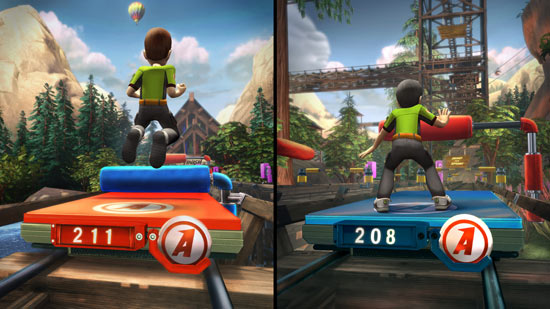
If you thought yes, "you are correct Sir!" According to the current study, playing Xbox Kinect™ Reflex Ridge resulted in a 1 MET higher rating than Wii Sports Boxing, and playing multiplayer yielded a 0.5 MET increase compared to solo play.
C. O’Donovan, E. Hirsch, E. Holohan, I. McBride, R. McManus, & J. Hussey (2012). Energy expended playing Xbox Kinect™ and Wii™ games: a preliminary study comparing single and multiplayer modes Physiotherapy, 98 (3), 224-229 DOI: 10.1016/j.physio.2012.05.010
Exergames have the potential to provide a novel physical activity choice for adolescents that increases energy expenditure and elicit cardiovascular responses related to health (Graf, Pratt, Hester, Short, 2009, Lanningham-Foster, Jensen, Foster, Redmond et al, 2009, Mellecker, McManus, 2008, Murphy et al. 2009).
Graf DL, Pratt LV, Hester CN, & Short KR (2009). Playing active video games increases energy expenditure in children. Pediatrics, 124 (2), 534-40 PMID: 19596737

Lanningham-Foster L, Foster RC, McCrady SK, Jensen TB, Mitre N, & Levine JA (2009). Activity-promoting video games and increased energy expenditure. The Journal of pediatrics, 154 (6), 819-23 PMID: 19324368

Mellecker RR, & McManus AM (2008). Energy expenditure and cardiovascular responses to seated and active gaming in children. Archives of pediatrics & adolescent medicine, 162 (9), 886-91 PMID: 18762609

Murphy EC, Carson L, Neal W, Baylis C, Donley D, & Yeater R (2009). Effects of an exercise intervention using Dance Dance Revolution on endothelial function and other risk factors in overweight children. International journal of pediatric obesity : IJPO : an official journal of the International Association for the Study of Obesity, 4 (4), 205-14 PMID: 19922034

Exergaming Points to Ponder (P2P)

  • Should they have played the same versions of games on both Wii and Kinect to  make a better comparison?
  • They should have played Kinect Sports Boxing to make an easier comparison.
  • I wonder what co-playing results would look like. 
  • I still haven't seen the study yet so I can't tell if it was versus (at same time - synchronous) or versus (take your own tine-asynchronous)


Click here to explore more of ExerGame Lab's archived posts involving research studies. 


Objectives
It has been reported that a higher galvanic skin response is seen when playing video games against another human player than when playing alone, which suggests increased effort. The objectives of this study were to compare energy expenditure when playing two popular active video game consoles, and to compare energy expenditure when playing in single and multiplayer modes.
Design
Crossover trial with randomised playing order.
ParticipantsFourteen healthy adults with a mean age of 21 [standard deviation (SD) 3] years.
Methods and interventionsEnergy expenditure was measured using an indirect calorimeter at rest, during 10 minutes of play on Xbox Kinect™ Reflex Ridge in both single and multiplayer modes, and during 10 minutes of play on Wii™ Sports Boxing in both single and multiplayer modes.
Main outcome measures
Metabolic equivalents (METs), heart rate, oxygen consumption and kilocalories expended.
Results
The energy expenditure during all gaming conditions was of a light intensity. Playing on the Xbox Kinect elicited greater energy expenditure than playing on the Wii [mean difference = 0.9 METs, 95% confidence interval (CI) 0.2 to 1.5]. Playing games in multiplayer mode led to greater energy expenditure (mean difference = 0.5 METs, 95% CI 0.1 to 0.9) and heart rate (mean difference = 7.9 beats/minute, 95% CI 2.0 to 13.8) than playing in single player mode.
Conclusions
No gaming condition required moderate-intensity activity in this group of young healthy adults. Potential explanations for the difference in energy expenditure seen between consoles and modes are discussed.
Keywords
Video games; Energy expenditure; Metabolic equivalent, exergame

Enter your email address:

Delivered by TinyLetter