Wednesday, December 5, 2012

Self-discrepancy and regulatory fit in avatar-based exergames (Study)

Wii Fit
Wii Fit (Photo credit: Wikipedia)
Drawing from Higgins's self-discrepancy theory and regulatory focus theory, this study examined the use of activated selves and regulatory foci in health games. Utilizing the Wii's® avatar-creating and exergaming features, a 2 (activated self: actual self versus ideal self) × 2 (regulatory focus: promotion versus prevention) × 2 (efficacy appeals: self-efficacy versus response-efficacy) between-subjects experiment tested the interactions of activated selves, regulatory foci, and efficacy appeals on low-calorie dieting intentions after health game playing. Results from an experiment with 156 participants demonstrated that a fit between regulatory focus and efficacy appeals induced greater dieting intentions when the actual self was activated while the opposite effect occurred when the ideal self was activated. Theoretical contributions to basic and applied social psychology as well as managerial implications for consumer behavior research are considered.

Read More: http://www.amsciepub.com/doi/abs/10.2466/06.07.21.PR0.111.6.697-710

Click here to explore more of ExerGame Lab's archived posts involving research studies. 
Enhanced by Zemanta

Thursday, November 1, 2012

25% of Teens Play Exergames! Do You? (Study)

As posted earlier from a recent press release in Pediatrics, about 25% of youth play exergames, twice per week on average, for  about 50 minutes each bout and with 73% of exergamers playing them at a moderate (MPA) or vigorous intensity (VPA).

O'Loughlin EK, Dugas EN, Sabiston CM, & O'Loughlin JL (2012). Prevalence and Correlates of Exergaming in Youth. Pediatrics PMID: 23027171


These levels are quite a bit higher than the figures we reported a few years ago (average 25 minutes), but this makes sense as popularity of motion gaming has exploded since then. Given the current figures (number of units produced) of the newest generation of camera-based controllers including Xbox Kinect and Playstation Move are 19 and 10.5 millions units respectively (Matthews, 2012; Moriarty, 2012) it seems evident that the games industry has mbraced this new wave of activity-based video games.
Yang, S.P., Treece, J.L, Miklas, C, & Graham, G (2009). Physical activity, sedentary, and exergaming time in a PEP school Research Quarterly for Exercise and Sport , 80 (1(Supplement))


Click here to explore more of ExerGame Lab's archived posts involving research studies. 

OBJECTIVES: Less than 15% of children and adolescents participate regularly in physical activity (PA) and, with ever-increasing obesity, strategies to improve PA levels in youth are urgently needed. Exergaming offers a PA alternative that may be especially attractive in our increasingly technophilic society. However, there are no observational studies of exergaming in population-based samples of adolescents. The purpose of this study was to investigate potential sociodemographic, lifestyle, psychosocial, weight-related, and mental health correlates of exergaming as well as describe the type, timing, and intensity of exergaming in a population-based sample of adolescents.

METHODS: Data on exergame use and potential sociodemographic, lifestyle, psychosocial, weight-related, and mental health correlates of exergaming were collected in mailed self-report questionnaires completed by 1241 grade 10 and 11 students from the Montreal area with a mean age of 16.8 years (SD = 0.05 years; 43% male) participating in the AdoQuest study. The independent correlates of exergaming were identified in multivariable logistic regression models.

RESULTS: Nearly one-quarter (24%) of participants reported exergaming. Exergamers played 2 days per week on average, for ∼50 minutes each bout; 73% of exergamers played at a moderate or vigorous intensity. Exergamers were more likely than nonexergamers to be girls, to play nonactive video games, to watch ≥2 hours of television per day, to be stressed about weight, and to be nonsmokers.

CONCLUSIONS: Many adolescents exergame at intensity levels that could help them achieve current moderate-to-vigorous PA recommendations. Interventions that encourage exergaming may increase PA and decrease sedentary behavior in select youth subgroups, notably in girls.

Wednesday, October 31, 2012

PhD Defense: Comparing MVPA, EE, RPE, & Enjoyment in Adolescents Playing Exergames

A couple of weeks ago I defended my dissertation titled: "Comparing MVPA, Duration, EE, RPE & Enjoyment of Adolescents Playing Exergames". I would like to thank everyone who has been so helpful and instrumental in getting me to this point, especially my Committee Chair Dr. Melissa Bopp; Committee Members:  Dr. Linda Caldwell, Dr. R. Scott Kretchmar, Dr. Karl Newell; and Dr. John Challis (former Grad Coordinator) all of Penn State University; PSU & SUNY Cortland Faculty and Staff; the Cortland YMCA staff and participants, and of course my wonderful and loving family. Some of the details have been omitted as the separate papers are in the process of being submitted to separate journals but it gives you a rough estimate of what I was investigating. If you have any questions please feel free to contact me.

Click here to explore more of ExerGame Lab's archived posts involving research studies. 

Wednesday, October 24, 2012

Learning and retention in patients with Parkinsons Disease playing exergames Wii Fit

Can patients with early-stage Parkinson's Disease improve scores on a functional reach test before and after exergame intervention training? Mendes and colleagues (2012) were interested in answering this question using Wii Fit as the intervention tool. I haven't see the entire paper yet but from the abstract it looks like some of the results are mixed. It appears that some of the cognitive demands of the game (attention, response inhibition, working memory) interfered and contributed to learning deficits; however, exergame trained patients were able to transfer exergame-related motor skills to a similar untrained task.
sciseekclaimtoken-5088df88b4785 Mendes, F., Pompeu, J., Lobo, A., da Silva, K., Oliveira, T., Zomignani, A., & Piemonte, M. (2012). Motor learning, retention and transfer after virtual-reality-based training in Parkinson's disease – effect of motor and cognitive demands of games: a longitudinal, controlled clinical study Physiotherapy, 98 (3), 217-223 DOI: 10.1016/j.physio.2012.06.001

Mendes, F.A.D.S., Pompeu, J.E., Lobo, A.M., da Silva, K.G., Oliveira, T.D.P., Zomignani, A.P. & Piemonte, M.E.P. (2012). Motor learning, retention and transfer after virtual-reality-based training in Parkinson's disease – effect of motor and cognitive demands of games: a longitudinal, controlled clinical study, Physiotherapy, 98 (3) 223. DOI: 10.1016/j.physio.2012.06.001

Thursday, October 4, 2012

Can Kids Be Motivated to Move More? Zamzee Kids Moved 60% More! (Study)

Kids who got access to the Zamzee website moved 59% more on average than kids in the control group, who did not get access to the website.

I guess that answers the questions to whether or not a device and access to a new website could get kids to move more.

Now I've been a huge fan of HopeLab for almost 5 years since being introduced to Re-Mission through Ellen and Richard at GFH 2008 or 2009. Keeping up with their product development and trials for Zamzee has been great - even a little cloak and daggerish at times:)

As you've already read, kids who received the Zamzee accelerometer and had access to an innovative website, increased their moderate to vigorous physical activity (MVPA) 59% above the control group that only received the Zamzee.

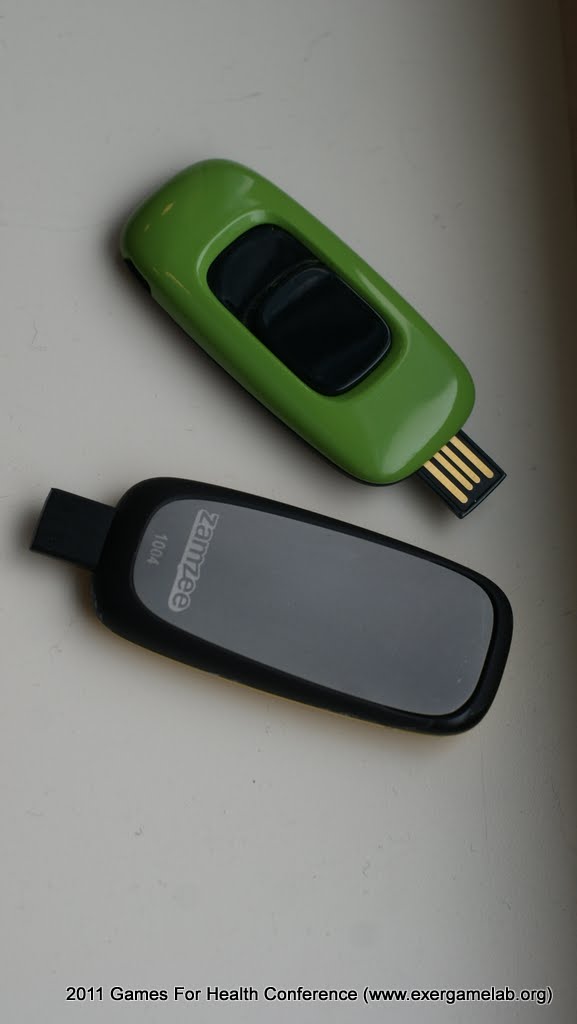
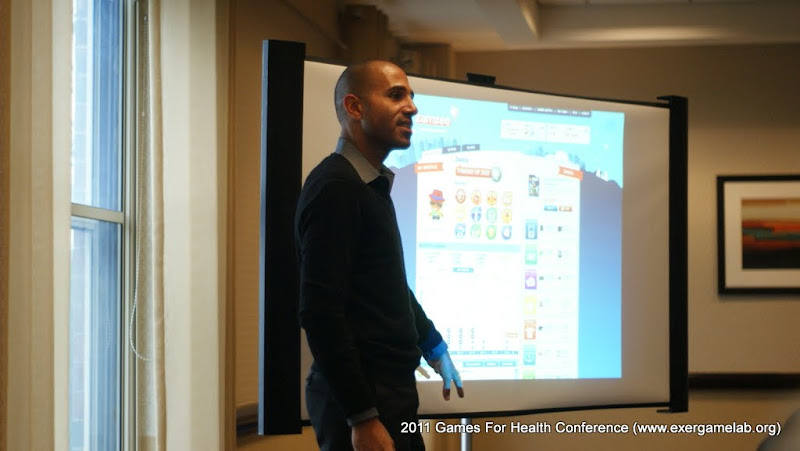
Below is a picture I took at the 2011 GFH conference where they provided us an update on Zamzee's product development and trial early results.

Besides the great news about the increase in MVPA, and other biological markers -  I think its great that the Zamzee group achieved CDC-recommended 60 min MVPA/day at a rate 4.5 times that of controls.

Points to Ponder (P2P)
  • My only question is the statistic the use (3.1% ± 0.3% of days vs. 0.7% ± 0.4%; p < .0001) sounds quite low - should it be days and not percent (3.1 ± 0.3 days vs. 0.7 ± 0.4; p < .0001)?
Kudos to HopeLab, their partners, and all the participants for such encouraging results about how to improve the health of young people.


Click here to explore more of ExerGame Lab's archived posts involving research studies.

Abstract

Motivating Physical Activity in Tweens: The Zamzee Randomized Controlled Trial and Biomarker Study

Nicole Guthrie, Fred Dillon, Jana Haritatos, and Steve Cole
HopeLab Foundation, 1991 Broadway St. Suite 136, Redwood City CA 94063

This presentation will report results from the Zamzee Impact Trial – a randomized controlled trial of the Zamzee accelerometer /motivational website system in 448 11-14-year-old adolescents recruited from 6 urban, suburban, and rural US middle schools. Zamzee combines individualized feedback, progress monitoring and goal setting, tangible incentives, and intrinsic motivation features to promote long-term increase in physical activity as measured by a 3-axis accelerometer system with automated upload to a central database. In this study, control participants received Zamzee activity monitors that uploaded data but had no access to the motivational intervention website. 186 individuals enrolled in a biomarker sub-study involving pre- and post-study blood sampling. Primary outcomes were accelerometer-based measures of weekly moderate-to-vigorous physical activity (MVPA) assessed  continuously over 6 months. Compared to controls, the Zamzee group showed an average 59% higher rate of MVPA (mean = 118 min/week ± SE 3 vs. 74 ± 5 for controls; p < .0001) throughout the 6-onth study, with no decrement in difference over time (no Group x Week interaction, p = .9415). These effects correspond to approximately 1,120 min MVPA and  8,800 kcal expended per participant over 6 months. The Zamzee group achieved CDC-recommended 60 min MVPA/day at a rate 4.5 times that of controls (3.1% ± 0.3% of days vs. 0.7% ± 0.4%; p < .0001). Within the biomarker sub-study, the Zamzee group showed more favorable pre- to post-study changes in LDL cholesterol (+0.3 ± 1.4 mg/dL vs. +5.1 ±1.6; p = .034), total cholesterol (+0.2 ± 1.5 mg/dL vs. +4.7 ± 1.7; p = .057), and, in protocol-adherent participants, HbA1c (-0.08% ± 0.03% vs. +0.08% ± 0.05%; p = .012). Non-significant effects were observed for CRP (-0.01 ± 0.06 mg/L vs. +0.53 ± 0.06; p = .322) and BMI (+0.34 ± 0.07 kg/m2 vs. +0.37 ±0.06; p = .781). The Zamzee activity meter/motivational website system can consistently increase MVPA over 6 months in middle school-aged children, with favorable effects on blood lipid and metabolic parameters.

ClinicalTrials.gov Identifier: NCT01433679.

About HopeLab
HopeLab is a non-profit organization founded in 2001 by Board Chair Pam Omidyar. HopeLab harnesses the power and appeal of technology to improve the health of young people. HopeLab applies a research-based, customer-focused development model to create products that positively impact health behavior. HopeLab is part of the Omidyar Group philanthropic enterprises. For more information, please visit http://www.hopelab.org.

About Zamzee
Zamzee is a social enterprise on a mission to make it easier for tweens and families to be more physically active. The Zamzee meter and motivational website is the result of several years of research and design based on feedback from kids and families. The Zamzee meter is sold for $29.95; access to the Zamzee website is free of charge. Zamzee was established in 2010 by HopeLab, a nonprofit research organization that uses the power and appeal of technology to improve the health of kids. Initial research and development of Zamzee was conducted by HopeLab, with support from the Robert Wood Johnson Foundation.  https://www.zamzee.com/
Enhanced by Zemanta

Wii Fit Improves Balance in Children with CP (Study)

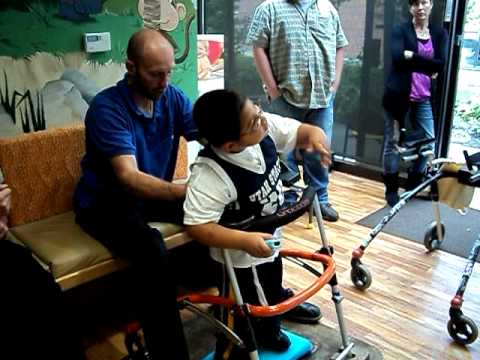
Can a 3 week physio regiment improve balance, running speed and agility in children with Cerebral Palsy (CP)? The first question before the investigators should have asked is if 3 weeks is a typical regiment length that sees improvement in those areas? If so, then ask the question if Wii Fit can be used in place of the traditional modalities. According to their findings, these children did not see a significant improvement in RSA scales, but balance scores did improve significantly. (Photo credit via wn.com)
Jelsma J, Pronk M, Ferguson G, & Jelsma-Smit D (2012). The effect of the Nintendo Wii Fit on balance control and gross motor function of children with spastic hemiplegic cerebral palsy. Developmental neurorehabilitation PMID: 23030836

Exergaming Points to Ponder (P2P)
  • Which games did they play in Wii Fit?
  • Were there 2 separate groups or was it a multiple baseline-design?
  • Although the changes may not have been statistically significant, were they clinical significant?
  • Were the changes over time compared to a traditional treatment group?
  • What assurances were there to mimic traditional tasks with the Wii Fit activities?
  • Was the total amount of time in therapy exactly the same as a traditional 3-week regiment? During a typical treatment period of 3 weeks, what would typically be the level of improvment occurring in patients.
  • Its interesting that they tested the children on running when for the most part there is no running feature in Wii Fit except for Free Run.
Objective: To study the impact of training using the Nintendo Wii Fit in 14 children with spastic hemiplegic cerebral palsy. Methods: A single-subject single blinded design with multiple subjects and baselines was utilised. Interactive video gaming (IVG) in lieu of regular physiotherapy was given for 3 weeks. Outcome measures included modified balance and running speed and agility (RSA) scales of the Bruininks-Oserestky test of Motor Performance 2 and the timed up and down stairs (TUDS). Results: Balances score improved significantly (F(2, 26) = 9.8286, p = 0.001). Changes over time in the RSA (F(2, 26) = 0.86198, p = 0.434) and the TUDS (F(2, 26) = 1.3862, p = 0.268) were not significant. Ten children preferred the intervention to conventional physiotherapy. Conclusion: Most children preferred the IVG but as the effect did not carry over into function, IVG should not be used in place of conventional therapy and further research is needed into its use as an adjunct to therapy.

Click here to explore more of ExerGame Lab's archived posts involving research studies. 
Enhanced by Zemanta

Enter your email address:

Delivered by TinyLetter