Wednesday, February 23, 2022

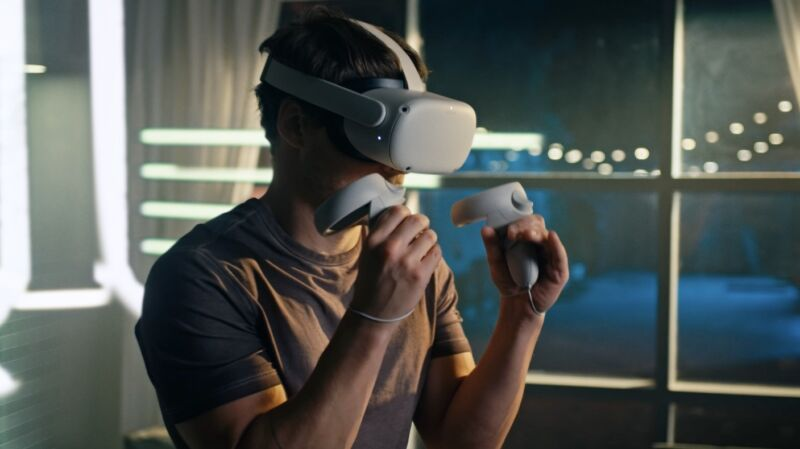
Is Liteboxer in the Metaverse better than Peleton?

Is Liteboxer in the Metaverse better than Peleton?  

Liteboxer 2.0
Real equipment, virtual world and virtual trainer 
  • VR Oculus Quest 2 ($300)
  • $19/monthly subscription
  • 500 classes
Liteboxer 1.0
Real equipment, virtual world and virtual trainer 
  • Physical "smart" equipment (+$1500)
  • $30/ monthly subscription
  • 800 classes

Some will prefer the physical targeting and sensations, while others will enjoy the virtual experiences. A more immersive experience would be with a haptic vest, on an  omni-deck, with haptic controllers to  provide more feedback and sensations.


Tuesday, February 22, 2022

Infinite Walking VR Boots for the Metaverse


Can walking in the metaverse and virtual reality lead to better health? Maybe using these large Ekto VR, boots might make your experience more realistic. Apparently they also have the feature of reducing motion sickness,  one of my personal  pet peeves about VR environments.


Click here to read more of ExerGame Lab's archived posts involving research studies. 

Wednesday, September 4, 2019

Space suit monitors Canadian astronaut's health and fitness


Imagine not having to worry about the exact skin placement of an electrode or accelerometer?! Canadian astronaut David Saint-Jacques is wearing the Hexoskin embedded sensored-shirt that can measure heart-rate, blood pressure, oxygen levels and temperature while orbiting the earth on the International Space Station.

Could a wearable like the Bio-Monitor help physical activity monitoring and #mhealth studies for validation against mobile apps or other wearables? I would be really interested in seeing some of the validation studies to see the accuracy compared to other devices or tests.


How it works
  • The wearable technology system is designed to be as comfortable as a typical snug shirt. The shirt has adjustable straps to position small metal sensors against the skin in order to get a good reading 
  • If an astronaut is about to exercise, he or she can use a tablet application to specify the type of activity and see his or her vital signs throughout the session.
  • Once finished, the astronaut disconnects the battery pack and plugs it into a base, which downloads the data to Earth through the Station's communications system for scientific analysis.


Friday, August 30, 2019

Exercising with video games (exergames) improves quality of life in patients with heart failure


logoAt the Heart Failure 2018 and the World Congress on Acute Heart Failure, researchers presented the second phase of their HF-Wii study examining the changes in Quality of Life (QoL).


Exercising with video games improves quality of life in patients with heart failure:


Professor Jaarsma said: "Patients in the exergame group had significantly higher quality of life after three months than those who received standard exercise advice. While there was no statistical difference in anxiety and depression, it was encouraging that playing the exergame did not increase anxiety."

Click here to read more of ExerGame Lab's archived posts involving research studies. 

Friday, June 8, 2018

Wii Fit at home for balance and mobility in children with cerebral palsy


In this recent research article Balance and mobility training at home using Wii Fit in children with cerebral palsy: a feasibility study, authors used Wii Fit to see if it might be an option for patients with CP as an at-home device to improve mobility and balance.

At first glance playing Wii Fit seems to have been well received and safe to use at home. As I get a hold of the rest of the paper, I will update this post.


Click here to read more of ExerGame Lab's archived posts involving research studies. 

Friday, June 1, 2018

Play Clock Yourself for Better Balance

Clock Yourself is an app-based exergame developed by Megan Lowry a physiotherpist from Australia to help her clients move their bodies and mind better. Seeking a solution to combine cognitive processing with locomotor skills (performance or rehabilitation), she co-founded Clock Yourself with Dave Wallace.
In five stages the Clock Yourself app introduces progressively complex activities to train us to think on our feet and to react quickly with our bodies.
I have not actually used the app yet, but will be getting a code shortly to give it a more thorough review.

First glance
- Clinician and evidence-based
- Links to peer-reviewed literature review
- Seeking researchers to conduct trials

Click here to read more of ExerGame Lab's archived posts involving research studies. 


Enter your email address:

Delivered by TinyLetter