Friday, June 1, 2012

Will Yamove! Into The Next Dance #Exergame?

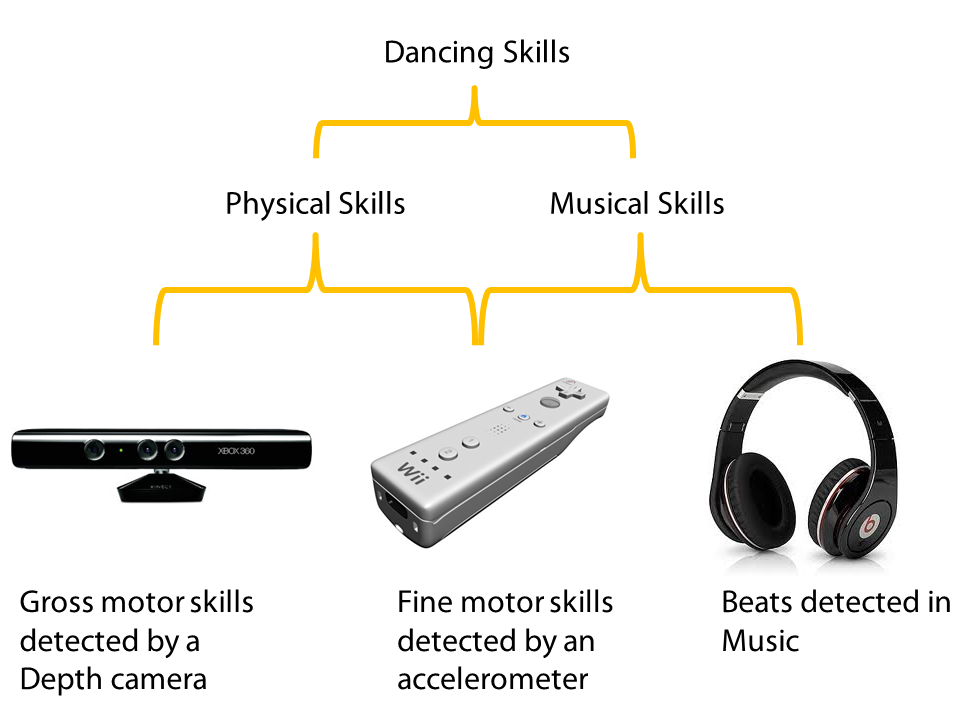
At NYU Game Center No Quarter Exhibition on Friday May 18, 2012 - Yamove! was on display  and is a a cooperative dance-battle style game (as featured on The Verge). Each pair of dancers makes up a dance and its up to the other pair of dancers to match the dance moves of the first pair on three different levels: creativity, intensity, and sync. Let's Boogie and get this game out on the App market! I think they're onto something big! "Would you dance with me?" now takes on a whole new meaning.


http://kotaku.com/5913825/heres-a-game-that-will-throw-you-into-b+boy-style-dance-battles
Click here to explore more of ExerGame Lab's archived posts involving research studies. 
Images via The Verge


The 8th Annual Games for Health Conference in Boston, MA at the Hyatt Harboside Hotel is June 12-14 -- under one month away!
Register today at: http://www.regonline.com/gbew2012


Additional Games for Health Keynotes!
Constance Steinkuehler Squire, senior policy analyst for the White House Office of Science and Technology Policy, will discuss the opportunities for videogames to address national challenges, including those in health, health care, and biotechnology.

Bill Crounse, MD, senior director of worldwide health for Microsoft, will present “Connecting & Kinecting Health and Health Care,” which will explore how Microsoft and its partners are merging its information and game technologies to create global solutions for personal health and professional health care.

Jane McGonigal, New York Times bestselling author and co-founder of SuperBetter Labs, will highlight the design and release of SuperBetter, a game-based social application designed to help people boost personal resilience and lead healthier, longer, and more positive lives.


Jay Walker, curator and chairman of TEDMED, a global community of people who passionately believe that the future of health and medicine is here, will provide the end-of-conference special guest keynote: “Gaming the System”.


About Games for Health
Founded in 2004, the Games for Health Project supports the development of the health games community, champions efforts to mainstream health games, and brings together researchers, medical professionals, and game developers to share information about the impact games and game technologies can have on health, health care, and policy. The Pioneer Portfolio of the Robert Wood Johnson Foundation is a major supporter of both the Games for Health Project and its annual Games for Health Conference.


About the Robert Wood Johnson Foundation and its Pioneer Portfolio
The Robert Wood Johnson Foundation focuses on the pressing health and health care issues facing the United States. As the nation’s largest philanthropy devoted exclusively to improving the health and health care of all Americans, the Foundation works with a diverse group of organizations and individuals to identify solutions and achieve comprehensive, meaningful and timely change. Projects in the Pioneer Portfolio are future-oriented and look beyond conventional thinking to explore solutions at the cutting edge of health and healthcare. For more information, visit www.rwjf.org/pioneer.

To see all the latest scheduled sessions please visit:
Our Schedule Block Page

You can also follow us  on Twitter. 


Enhanced by Zemanta

Wednesday, May 30, 2012

Games For Health 2012 Preview & HHS Webinar

Here is a shortened summary (Storify) of yesterday's HHS Webinar on Games For Health and Serious Games for Improved Health Care. Lots of panelists will also be joining us in Boston in a couple of weeks - so it was great to get a preview into some of the sessions.

Click here to explore more of ExerGame Lab's archived posts involving research studies. 

The 8th Annual Games for Health Conference in Boston, MA at the Hyatt Harboside Hotel is June 12-14 -- under one month away!
Register today at: http://www.regonline.com/gbew2012


Additional Games for Health Keynotes!
Constance Steinkuehler Squire, senior policy analyst for the White House Office of Science and Technology Policy, will discuss the opportunities for videogames to address national challenges, including those in health, health care, and biotechnology.

Bill Crounse, MD, senior director of worldwide health for Microsoft, will present “Connecting & Kinecting Health and Health Care,” which will explore how Microsoft and its partners are merging its information and game technologies to create global solutions for personal health and professional health care.

Jane McGonigal, New York Times bestselling author and co-founder of SuperBetter Labs, will highlight the design and release of SuperBetter, a game-based social application designed to help people boost personal resilience and lead healthier, longer, and more positive lives.


Jay Walker, curator and chairman of TEDMED, a global community of people who passionately believe that the future of health and medicine is here, will provide the end-of-conference special guest keynote: “Gaming the System”.


About Games for Health
Founded in 2004, the Games for Health Project supports the development of the health games community, champions efforts to mainstream health games, and brings together researchers, medical professionals, and game developers to share information about the impact games and game technologies can have on health, health care, and policy. The Pioneer Portfolio of the Robert Wood Johnson Foundation is a major supporter of both the Games for Health Project and its annual Games for Health Conference.


About the Robert Wood Johnson Foundation and its Pioneer Portfolio
The Robert Wood Johnson Foundation focuses on the pressing health and health care issues facing the United States. As the nation’s largest philanthropy devoted exclusively to improving the health and health care of all Americans, the Foundation works with a diverse group of organizations and individuals to identify solutions and achieve comprehensive, meaningful and timely change. Projects in the Pioneer Portfolio are future-oriented and look beyond conventional thinking to explore solutions at the cutting edge of health and healthcare. For more information, visit www.rwjf.org/pioneer.

To see all the latest scheduled sessions please visit:
Our Schedule Block Page

You can also follow us  on Twitter. 

Tuesday, May 29, 2012

Can Video Games Improve Clinical Health? (Review Study)

Researchers asked that question while conducting a meta-analysis on improvements to patient health.  Both #seriousgames and #exergames were identified including the following articles snagged at Research Blogging. Results of the meta-analysis revealed video games can substantially improve outcomes in physical therapy (69%), psychological therapy (59%), getting patients more active (42%) and for pain management (42%). While not saying that video games can improve all areas of health perfectly, the authors conclude...
Despite these limitations, this comprehensive systematic review demonstrates that video games may have potential for improving health in a wide variety of areas, for a variety of sociodemographic groups. This is a valuable finding, particularly given the growing popularity and ubiquity of video games worldwide. To most effectively assess the potential benefits of video games for health, it will be important for further research to utilize (1) RCT methodology when appropriate; (2) longer follow-up duration; (3) improved measures of quality, such as randomization and blinding; and (4) standardized measurement tools and careful attention to the quality of outcome measures.
  • Primack BA, Carroll MV, McNamara M, Klem ML, King B, Rich M, Chan CW, & Nayak S (2012). Role of video games in improving health-related outcomes: a systematic review. American Journal of Preventive Medicine, 42 (6), 630-8 PMID: 22608382
  • Murphy EC, Carson L, Neal W, Baylis C, Donley D, & Yeater R (2009). Effects of an exercise intervention using Dance Dance Revolution on endothelial function and other risk factors in overweight children. International journal of pediatric obesity : IJPO : an official journal of the International Association for the Study of Obesity, 4 (4), 205-14 PMID: 19922034
  • Howcroft J, Klejman S, Fehlings D, Wright V, Zabjek K, Andrysek J, & Biddiss E (2012). Active Video Game Play in Children With Cerebral Palsy: Potential for Physical Activity Promotion and Rehabilitation Therapies. Archives of Physical Medicine and Rehabilitation PMID: 22571917
  • Ni Mhurchu C, Maddison R, Jiang Y, Jull A, Prapavessis H, & Rodgers A (2008). Couch potatoes to jumping beans: a pilot study of the effect of active video games on physical activity in children. The International Journal of Behavioral Nutrition and Physical Activity, 5 PMID: 18257911
Click here to explore more of ExerGame Lab's archived posts involving research studies. 
Enhanced by Zemanta

Saturday, May 26, 2012

Light Trikes:The Cycling TRON #Exergame

At the recent  SXSW Interactive Opening Party, the Frog Design group made two one-of-a-kind interactive #exergaming displays using cycling and stepping.Light Trikes is obviously inspired by TRON as your role is to try to get your opponent to run into your colored line before running into theirs. Apparently they are not looking to do either of these concepts/interactive exhibits again, but if there's enough interest - you never know when they might be seen again. Stay tuned for any more news about this very cool exergame. The other game Crowd Connect is like a giant version of Connect 4 with people playing against the machine. Not a lot of exercise is involved in either one but there is definitely room for opportunities to tweak and modify gameplay to encourage longer and more intense activities.
Click here to explore more of ExerGame Lab's archived posts involving Exergame Bikes..

Click here to explore more of ExerGame Lab's archived posts involving projects.
About Frog
frog works with the world’s leading companies, helping them to design, engineer, and bring to market meaningful products and services. With an interdisciplinary team of more than 1,600 designers, strategists, and software engineers, frog delivers connected experiences that span multiple technologies, platforms, and media. frog works across a broad spectrum of industries, including consumer electronics, telecommunications, healthcare, energy, automotive, media, entertainment, education, finance, retail, and fashion. Clients include Disney, GE, HP, Intel, Microsoft, MTV, Qualcomm, Siemens, and many other Fortune 500 brands. Founded in 1969, frog is headquartered in San Francisco, with locations in Amsterdam, Austin, Boston, Chennai, Bangalore, Gurgaon, Johannesburg, Kiev, Milan, Munich, New York, Seattle, Shanghai, and Vinnitsa. frog is a company of the Aricent Group, a global innovation and technology services firm. The Aricent Group is owned by Kohlberg Kravis Roberts & Co., Sequoia Capital, The Family Office, and CPP Investment Board. frog is a Global Growth Company member of the World Economic Forum. frogdesign.com
Via Arcade Heroes: :

Friday, May 25, 2012

WiiPop(ping) Kinect: The Future of Dance #Exergames

As in all games especially exergames, so much of the gameplay will be predicated on actual dance skill proficiency.... so someone like me who can't pop and lock - would be terrible at it - but I know I'd have fun exergaming. WiiPop allows the user to freestyle and improvise their dance moves, instead of repeating a pre-defined routine locked onto a small area or touch sensitive floor pads. Bust a Move!


Click here to explore more of ExerGame Lab's archived posts involving exergame projects 

The 8th Annual Games for Health Conference in Boston, MA at the Hyatt Harboside Hotel is June 12-14 -- under one month away!
Register today at: http://www.regonline.com/gbew2012


Additional Games for Health Keynotes!
Constance Steinkuehler Squire, senior policy analyst for the White House Office of Science and Technology Policy, will discuss the opportunities for videogames to address national challenges, including those in health, health care, and biotechnology.

Bill Crounse, MD, senior director of worldwide health for Microsoft, will present “Connecting & Kinecting Health and Health Care,” which will explore how Microsoft and its partners are merging its information and game technologies to create global solutions for personal health and professional health care.

Jane McGonigal, New York Times bestselling author and co-founder of SuperBetter Labs, will highlight the design and release of SuperBetter, a game-based social application designed to help people boost personal resilience and lead healthier, longer, and more positive lives.

Jay Walker, curator and chairman of TEDMED, a global community of people who passionately believe that the future of health and medicine is here, will provide the end-of-conference special guest keynote: “Gaming the System”.

About Games for Health
Founded in 2004, the Games for Health Project supports the development of the health games community, champions efforts to mainstream health games, and brings together researchers, medical professionals, and game developers to share information about the impact games and game technologies can have on health, health care, and policy. The Pioneer Portfolio of the Robert Wood Johnson Foundation is a major supporter of both the Games for Health Project and its annual Games for Health Conference.

About the Robert Wood Johnson Foundation and its Pioneer Portfolio
The Robert Wood Johnson Foundation focuses on the pressing health and health care issues facing the United States. As the nation’s largest philanthropy devoted exclusively to improving the health and health care of all Americans, the Foundation works with a diverse group of organizations and individuals to identify solutions and achieve comprehensive, meaningful and timely change. Projects in the Pioneer Portfolio are future-oriented and look beyond conventional thinking to explore solutions at the cutting edge of health and healthcare. For more information, visit www.rwjf.org/pioneer.

Our Schedule Block Page
You can also follow us  on Twitter. 

Thursday, May 24, 2012

Positive effect of videogames #exergames on body composition

Researchers (Maddison et al.) from New Zealand analyzed data from a randomized controlled trial of an active videogame intervention on body composition, looking at mediating effects of secondary outcomes. The trial found that playing the videogame reduced participants’ body mass index at 24 weeks, but, there was no effect on physical activity (physical activity levels were the same) or food snacking.

The researchers concluded that “playing exergames can have a positive effect on body composition in overweight or obese children and this effect is most likely mediated through improved aerobic fitness.” They also indicated additional research about this type of intervention and mediators, such as preferences for physical activity or changes in sedentary behavior, is needed.

Maddison R, Ni Mhurchu C, Jull A, Prapavessis H, Foley LS, & Jiang Y (2012). Active video games: the mediating effect of aerobic fitness on body composition. The International Journal of Behavioral Nutrition and Physical Activity, 9 (1) PMID: 22554052

Participants
322 overweight and obese children aged 10–14 years.

Exergames Played
EyeToy Play3, EyeToy Kinetic, EyeToy Sport, and Dance Factory

Results
Only aerobic fitness at 24 weeks met the conditions for mediation, and was a significant mediator of BMI.

Exergaming Points 2 Ponder (P2P)
  • If there was no difference in physical activity, why was there a difference in VO2 change? How do you explain the difference?
  • If the accelerometer epoch was not sensitive enough to capture the data effectively for time spent exergaming, how can you be sure that the exergames mediated the change in body composition via increased fitness. In other words, how do you know that the participants got fitter from playing exergames?
  • Were they given a prescription to play a certain number of times, intensity, difficulty, with or without friends/family?
  • Should fitness levels be an accurate proxy measure when using similar accelerometers for exergaming studies?
  • What would you have done differently?
Click here to explore more of ExerGame Lab's archived posts involving research studies. 

Other paper published on same data:
Maddison, R., Foley, L., Ni Mhurchu, C., Jiang, Y., Jull, A., Prapavessis, H., Hohepa, M., & Rodgers, A. (2011). Effects of active video games on body composition: a randomized controlled trial American Journal of Clinical Nutrition, 94 (1), 156-163 DOI: 10.3945/ajcn.110.009142
The 8th Annual Games for Health Conference in Boston, MA at the Hyatt Harboside Hotel is June 12-14 -- under one month away!
Register today at: http://www.regonline.com/gbew2012


Additional Games for Health Keynotes!
Constance Steinkuehler Squire, senior policy analyst for the White House Office of Science and Technology Policy, will discuss the opportunities for videogames to address national challenges, including those in health, health care, and biotechnology.

Bill Crounse, MD, senior director of worldwide health for Microsoft, will present “Connecting & Kinecting Health and Health Care,” which will explore how Microsoft and its partners are merging its information and game technologies to create global solutions for personal health and professional health care.

Jane McGonigal, New York Times bestselling author and co-founder of SuperBetter Labs, will highlight the design and release of SuperBetter, a game-based social application designed to help people boost personal resilience and lead healthier, longer, and more positive lives.


Jay Walker, curator and chairman of TEDMED, a global community of people who passionately believe that the future of health and medicine is here, will provide the end-of-conference special guest keynote: “Gaming the System”.


About Games for Health
Founded in 2004, the Games for Health Project supports the development of the health games community, champions efforts to mainstream health games, and brings together researchers, medical professionals, and game developers to share information about the impact games and game technologies can have on health, health care, and policy. The Pioneer Portfolio of the Robert Wood Johnson Foundation is a major supporter of both the Games for Health Project and its annual Games for Health Conference.


About the Robert Wood Johnson Foundation and its Pioneer Portfolio
The Robert Wood Johnson Foundation focuses on the pressing health and health care issues facing the United States. As the nation’s largest philanthropy devoted exclusively to improving the health and health care of all Americans, the Foundation works with a diverse group of organizations and individuals to identify solutions and achieve comprehensive, meaningful and timely change. Projects in the Pioneer Portfolio are future-oriented and look beyond conventional thinking to explore solutions at the cutting edge of health and healthcare. For more information, visit www.rwjf.org/pioneer.


To see all the latest scheduled sessions please visit:
Our Schedule Block Page

You can also follow us  on Twitter. 

Increased understanding of why and how physical activity impacts on health outcomes is needed to increase the effectiveness of physical activity interventions. A recent randomized controlled trial of an active video game (PlayStation EyeToyTM) intervention showed a statistically significant treatment effect on the primary outcome, change from baseline in body mass index (BMI), which favored the intervention group at 24 weeks. In this short paper we evaluate the mediating effects of the secondary outcomes.
Objective
To identify mediators of the effect of an active video games intervention on body composition.
Methods
Data from a two-arm parallel randomized controlled trial of an active video game intervention (n = 322) were analyzed. The primary outcome was change from baseline in BMI. A priori secondary outcomes were considered as potential mediators of the intervention on BMI, including aerobic fitness (VO2Max), time spent in moderate-to-vigorous physical activity (MVPA), and food snacking at 24 weeks.
Results
Only aerobic fitness at 24 weeks met the conditions for mediation, and was a significant mediator of BMI.
Conclusion
Playing active video games can have a positive effect on body composition in overweight or obese children and this effect is most likely mediated through improved aerobic fitness. Future trials should examine other potential mediators related to this type of intervention. Trial registration Australian New Zealand Clinical Trials Registry Website: http://www.anzctr.org.au Study ID number: ACTRN12607000632493

Enter your email address:

Delivered by TinyLetter